

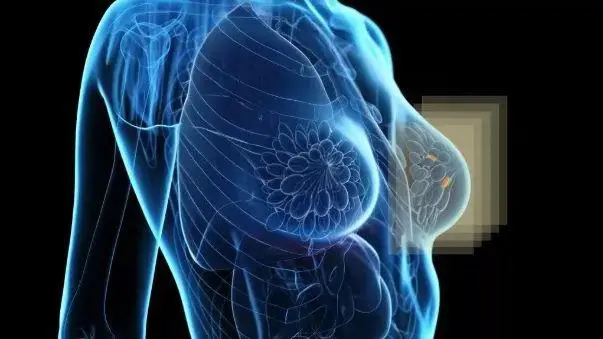
Researchers say a prototype scanner designed to examine breast tissue density in women and detect cancerous tumors has the potential to “ultimately save more lives.”
Generally, higher breast tissue density, indicating more fibrous and glandular tissue and less fatty tissue, increases the risk of breast cancer. This is known as dense breasts or mammographically dense breasts.
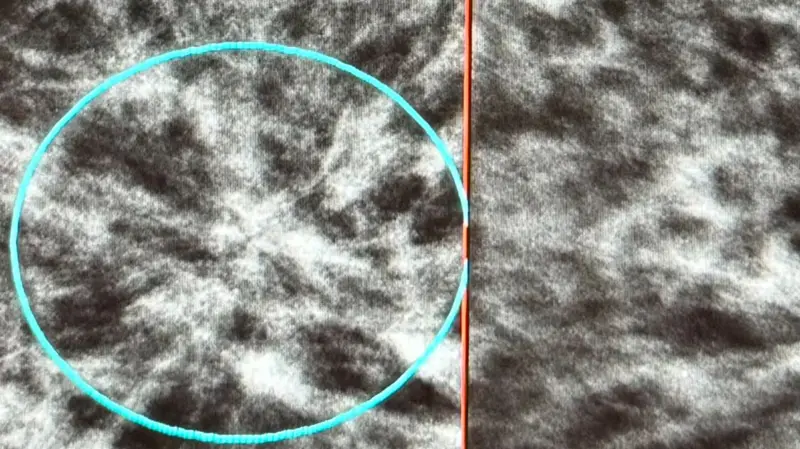
In mammograms, dense tissue appears white, but tumors also appear white, making them difficult to distinguish.
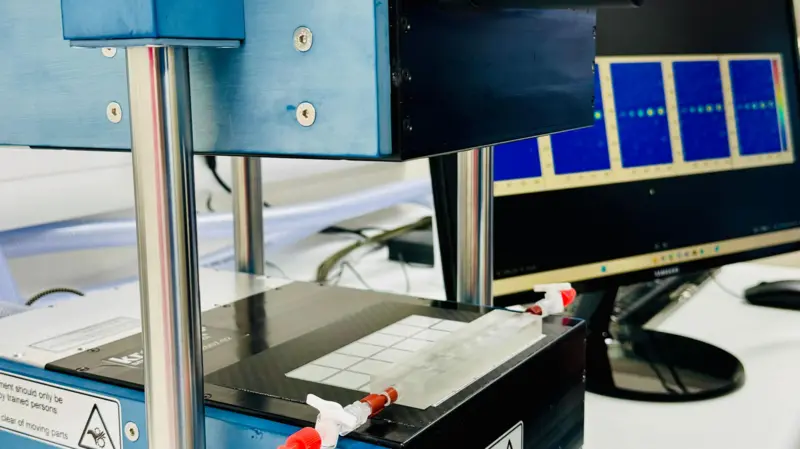
This new imaging technology, developed by the technology company Kromek in collaboration with Newcastle Hospitals, Newcastle University, and University College London (UCL), uses a radioactive tracer to “make cancer cells glow,” significantly improving detection accuracy.
The project will enter clinical trials after testing is complete.
Dr. Nellis Forrest, a consultant breast radiologist at Newcastle Hospitals, said: “Approximately 40% of women have dense breast tissue, but this is only discovered when they undergo a mammogram.”
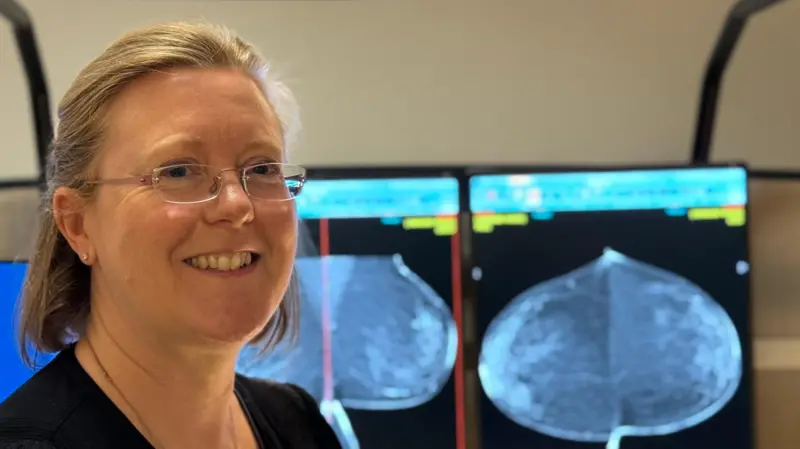
She stated that this usually doesn’t require excessive worry, as mammography screening is generally effective, but “women with dense breast tissue have a slightly increased risk of developing breast cancer.”
She explained that when breast tissue is very dense, it appears white on a mammogram, “so we have to find a single white spot among a large amount of tissue that is all potentially white.”
This situation is often described as “looking for a white cloud in a cloudy sky.”
Forrest noted that improving techniques for detecting cancer in dense breasts is “extremely important,” and she is very pleased with the progress of this new prototype scanning technology, which has been underway since 2022.
She said, “We hope that this technology will ultimately save more lives lost to breast cancer.”

Aly Murphy, a 65-year-old breast cancer patient and nurse who participated in the study, described the experience as “exhilarating.”
She said she only discovered she had dense breast tissue by chance and believes her cancer may have been missed in previous screenings.
She described the research project as “pushing the boundaries of existing screening technology, which is exactly what we need to be doing right now.”
“I think it’s incredibly exciting. I think it’s a revolutionary breakthrough.”
Cromek, a technology company based in Sedgefield, County Durham, currently holds a contract with the UK Ministry of Defence to supply nuclear radiation detectors.
CEO Arnab Basu said he hopes the machine the company is developing will help detect difficult-to-diagnose cases of breast cancer.
He said: “This is very similar to how nuclear medicine is used in other imaging diagnostics. Patients are injected with a tracer, which then accumulates in the cancer cells.”
He added that this technology allows lasers to focus on the cancer cells, causing them to “literally light up.”
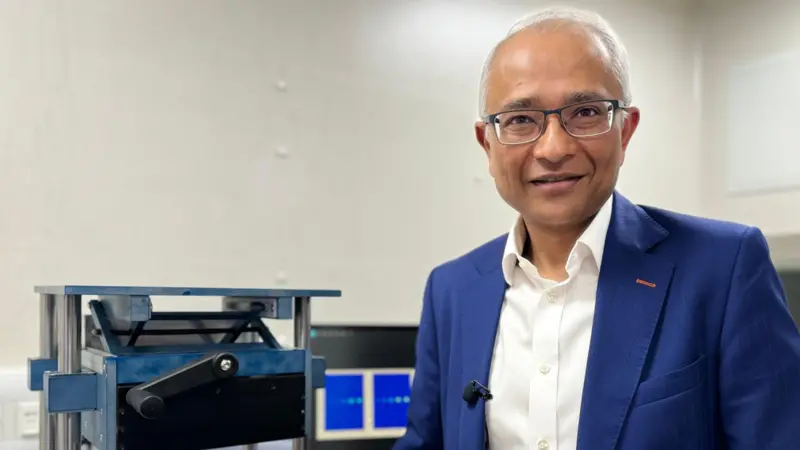
Currently, prototype testing is underway at Newcastle Hospital.
The local Northern Medical Physics and Clinical Engineering team is overseeing the device’s operation; the HealthTech Research Centre in Diagnostic and Technology Evaluation, part of the National Institute for Health and Care Research (NIHR), is also involved.
Professor Kris Thielemans, Professor of Medical Imaging Physics at University College London, said that the collaboration between the teams has “made excellent progress” and believes the technology “has considerable potential for applications” beyond breast imaging.
The project has received £2.5 million in funding from Innovate UK.
Once the current prototype testing phase is complete, the technology will move into clinical trials.
Sally Kum of Breast Cancer Now, a breast cancer care charity, said the organization “fully supports ongoing research into breast imaging technologies, particularly those that improve cancer detection in dense breasts.”
She noted that if the UK National Screening Committee finds clear evidence to support assessing breast density in a specific way and offering alternative imaging methods to women with dense breasts, “we will actively push for these changes to be implemented across the UK as soon as possible.”
However, she added that the charity still encourages all eligible women to participate in mammogram screenings when invited.
The UK Department for Health and Social Care said the government is about to publish a plan to “comprehensively tackle cancer,” including improving cancer screening and diagnosis.
A spokesperson stated: “Research is currently underway into the use of additional tests for women with higher breast density within the NHS breast cancer screening program. The UK National Screening Committee will review the evidence once new research becomes available.”